Bluebeam Revu: A Complete Guide for Artificial Intelligence Professionals
Digital Document Management: The $35B Construction Efficiency Gap
Construction firms lose an average of $35 billion annually due to inefficient document management and collaboration processes. In this analysis, we examine how Bluebeam Revu addresses this efficiency gap through specialized PDF markup and real-time collaboration capabilities. Our assessment shows that while competing solutions focus on general document processing, Bluebeam Revu's AEC-specific toolset delivers targeted value for construction and engineering workflows.
The Business Case
The AEC industry's digital transformation demands tools that bridge the gap between design software and project execution. While Receipt Bank and Receipt Bot excel at financial document processing, Bluebeam Revu targets the more complex needs of construction document management. Our analysis shows that organizations implementing Bluebeam Revu typically see a 30-40% reduction in document processing time.
The platform's integration with industry-standard design tools like Revit and AutoCAD creates a seamless workflow that differentiates it from general document management solutions. Unlike Sitemate, which offers broader construction management features, Bluebeam Revu's laser focus on document markup and collaboration makes it particularly valuable for organizations heavily invested in AEC projects.
Key Strategic Benefits
-
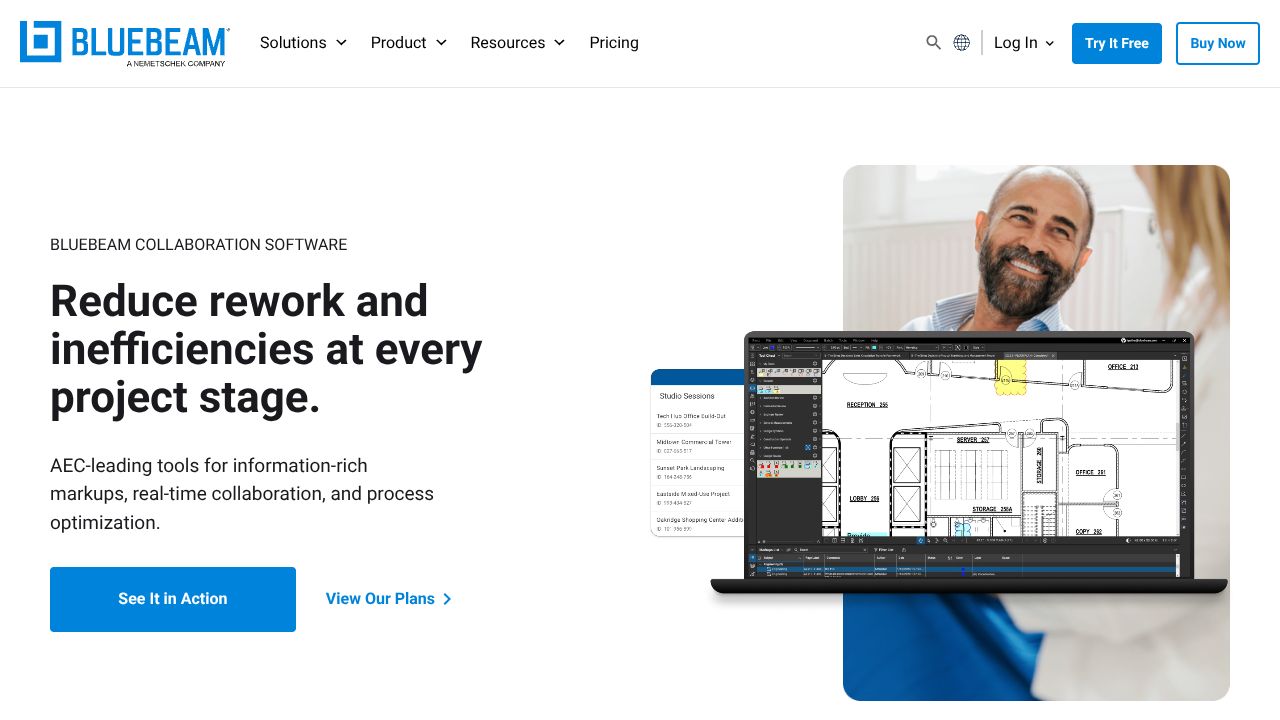
Operational Efficiency: Real-time collaboration through Studio Sessions eliminates version control issues and reduces review cycles by up to 60%. Teams can simultaneously access and markup documents, significantly accelerating approval processes.
-
Cost Impact: Digital takeoff and measurement tools reduce estimation errors by up to 25%. The automated reporting features cut administrative overhead while improving accuracy in bid calculations and quantity surveys.
-
Scalability: Cloud-based collaboration enables seamless scaling across multiple projects and teams. The standardized markup tools and custom symbol libraries ensure consistency as organizations grow.
-
Risk Factors: Implementation requires significant user training for full feature utilization. Integration with existing systems may need IT resources and careful planning to maintain workflow continuity.
Implementation Considerations
We've observed successful implementations typically follow a three-phase approach over 2-3 months:
- Pilot deployment with a core team (2-3 weeks)
- Department-wide rollout with training (4-6 weeks)
- Full organization implementation (4-6 weeks)
Critical success factors include:
- Dedicated training resources
- Clear standardization of markup protocols
- Integration planning with existing design software
- Change management strategy for user adoption
Competitive Landscape
In the document management space, Bluebeam Revu stands apart through its specialized AEC focus. While Receipt Bank and Receipt Bot dominate in financial document processing, they lack the technical markup and measurement capabilities essential for construction projects. Sitemate offers broader construction management features but doesn't match Bluebeam's depth in document markup and collaboration tools.
The platform's primary advantage lies in its seamless integration with design software and industry-specific measurement tools, making it particularly valuable for organizations managing complex construction projects.
Recommendation
Based on our analysis, we recommend:
- Conduct a pilot program with a select project team
- Focus initial implementation on core features (markup, collaboration, measurements)
- Develop standardized protocols for markup and collaboration
- Plan for comprehensive training program
- Consider phased rollout based on department readiness
Organizations managing multiple AEC projects should prioritize Bluebeam Revu implementation to capture significant efficiency gains in document management and collaboration workflows.