AI Security Gaps: Insights from Lorikeet Case Study
Your AI Copilot Passed; Your Attack Surface Didn’t — Why This Case Study Should Rewire Your Security Spend
You know the drill—back-to-back standups, a sprint review that runs long, and a deck claiming your AI code audit found “no criticals.” Then, production traffic spikes, and you’re left wondering what your green checks actually covered. The Lorikeet Security Case Study shows how AI-assisted reviews can be excellent at code-level hygiene while still missing runtime, configuration, and session-layer risks—the very issues that turn into breaches and compliance gaps.
Bottom line: AI security audits are necessary, but not sufficient. Leaders need a dual-track model that marries AI code review with targeted manual pentesting to capture residual risk where it actually lives.
The Business Case
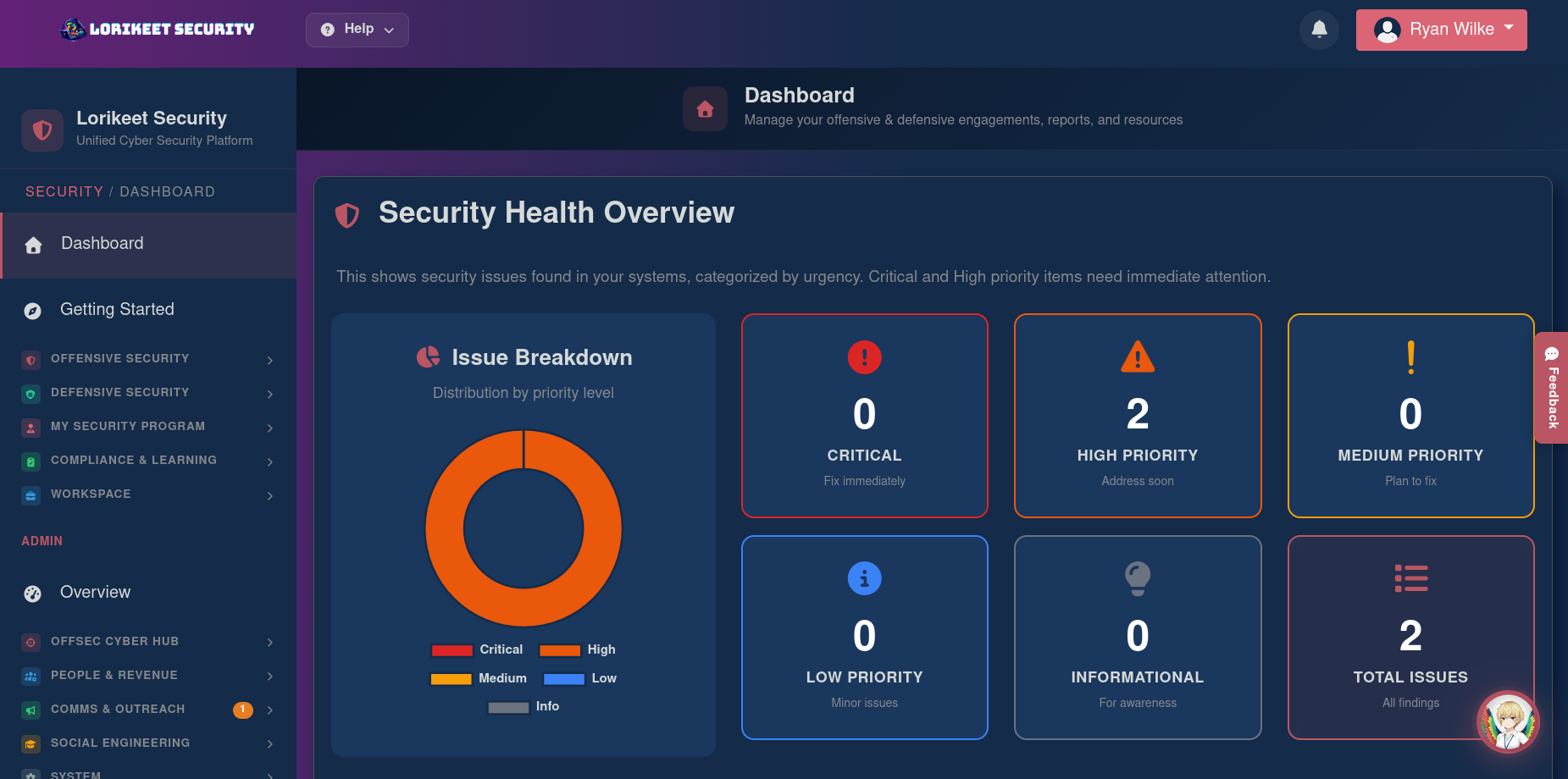
Our team has seen the same pattern across practitioner networks and client feedback: as AI tools like Claude, Cursor, and Copilot compress source-level vulnerabilities, residual risk migrates to runtime behavior, infrastructure posture, and edge-case authentication flows. In the Lorikeet Security case study, a Claude-driven audit closed XSS, SQLi, template injection, and weak crypto. Yet a subsequent manual pentest still uncovered five additional findings (two High, one Medium, two Low) across session management edge cases, runtime TLS posture, file-system hygiene, and reverse-proxy header configuration—areas AI was structurally unable to see.
For AI-native orgs, that delta is your competitive moat. It reduces incident likelihood, shortens audit cycles for SOC 2/HIPAA/PCI-DSS/HITRUST/FedRAMP, preserves roadmap velocity, and strengthens customer trust. The signal here isn’t that AI failed; it’s that AI moved the bar, making expert-led, runtime-focused validation more valuable. With 170+ engagements since 2021 and delivery via a modern PTaaS portal, the Lorikeet Security approach translates experimentation into production-grade assurance.
Key Strategic Benefits
-
Operational Efficiency:
- Pairing AI-driven code audits with targeted manual testing streamlines remediation: AI clears the obvious, humans validate the consequential. Our peers report faster triage cycles when findings arrive pre-prioritized with live context via PTaaS portals and real-time chat.
- Compliance-aligned reporting reduces duplicative effort across SOC 2 and HIPAA evidence, improving audit readiness without separate workstreams.
-
Cost Impact:
- Capturing session/TLS/proxy misconfigurations pre-incident avoids high-cost downtime, IR retainers, and reputational harm. Two Highs avoided is often worth multiples of a pentest contract.
- PTaaS delivery compresses reporting cycles and integrates into ticketing, reducing engineering drag and opportunity cost versus traditional pentest PDFs.
-
Scalability:
- As your AI-assisted development accelerates release cadence, continuous Attack Surface Management plus periodic manual pentests scale better than annual “big-bang” tests.
- Multi-cloud and microservice footprints benefit from scoped, runtime-first testing that targets the riskiest edges rather than testing every line of safe code.
-
Risk Factors:
- Over-indexing on AI audit results can create blind spots in session lifecycle, crypto-in-use, and edge network configurations—precisely what the case study surfaced.
- Leadership should watch for scope drift, vendor lock-in to proprietary PTaaS portals, and inadequate retesting SLAs after remediation.
Implementation Considerations
From our workshops with AI-led engineering teams, the winning playbook is dual-track. First, institutionalize automated AI code reviews in PR workflows; treat them as an internal control. Second, engage a manual pentest focused on runtime and configuration surfaces your AI can’t introspect. Expect 2–3 weeks to scope, test, and debrief a focused engagement; add a week if compliance reporting must map to SOC 2/HIPAA/PCI-DSS controls.
Resource-wise, assign a security owner, an infra/DevOps liaison, and an app lead. Ensure staging mirrors production TLS, proxies, and headers; provide safe test accounts, logs, and feature flags to replicate session edge cases. Integration into your ticketing (Jira, Linear) and chat (Slack) through a PTaaS portal keeps remediation tight and auditable. Change management matters: define severities, time-to-fix SLAs, and retest windows up front. For regulated teams, coordinate with vCISO or GRC to align artifacts with upcoming audits to avoid rework.
Competitive Landscape
While Flowtriq excels at instant DDoS detection and auto-mitigation to protect uptime, the Lorikeet Security Case Study is better suited for leaders validating application-layer, configuration, and identity risks that DDoS tools don’t address. If your primary KPI is availability under volumetric attack, Flowtriq offers rapid time-to-value and operational simplicity.
Conversely, if your priority is reducing breach likelihood and audit friction in AI-native development, the case study demonstrates why Lorikeet Security is built for that gap—manual pentesting that complements AI-driven code review. We’ve debated this internally and with our community: DDoS protection and offensive validation are adjacent, not interchangeable. Smart leaders deploy both, sequencing budget by business risk and customer commitments.
Recommendation
Adopt a dual-track security operating model. 1) Institutionalize AI code audits across repos. 2) Commission a runtime-focused manual pentest to validate session, TLS, file-system, and proxy posture—exactly where the case study found two Highs. 3) Map findings to compliance controls and set SLAs and retest cadence. 4) For availability risk, pair with Flowtriq. Read the case study to brief your board and GRC team: https://lorikeetsecurity.com/blog/flowtriq-case-study-ai-audit-pentest-gap
We’ve found this sequencing turns AI experimentation into production reality—measurable risk reduction, cleaner audits, and fewer 2 a.m. pages.