Wix ADI: A Complete Guide for Artificial Intelligence Professionals
The High Cost of the Digital Bottleneck
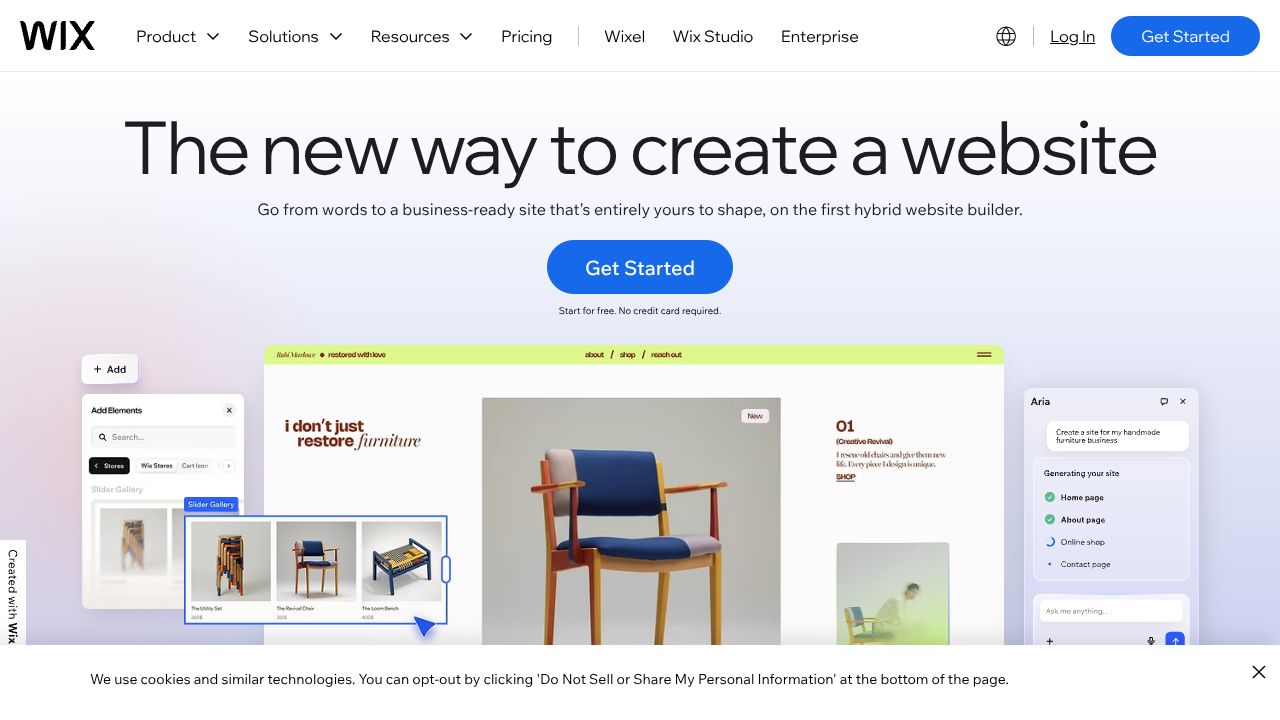
You know the drill—your marketing team has a brilliant campaign ready to launch, but the project stalls for three weeks because the web development queue is backlogged with minor landing page updates. This friction between creative vision and technical execution doesn't just delay launches; it erodes your competitive edge and bleeds potential revenue while your competitors iterate in real-time. Wix ADI (Artificial Design Intelligence) represents a fundamental shift from manual construction to prompt-based orchestration, allowing enterprises to deploy sophisticated, high-converting digital assets in minutes rather than months. For the AI leader, the bottom line is clear: it’s about decoupling growth from headcount.
Accelerating Time-to-Value in the Attention Economy
From our collective experience at The Algorithm Alchemists, we’ve seen that the most significant barrier to AI adoption isn't the technology—it's the integration into existing workflows. Wix ADI addresses this by positioning itself as an "Enterprise-grade" engine that bridges the gap between raw AI generation and production reality. While many tools focus on the novelty of AI-generated aesthetics, Wix leverages a massive ecosystem of 800+ templates to ensure that the output isn't just "fast," but structurally sound and SEO-optimized.
The business case for Wix ADI centers on the democratization of high-fidelity web production. By moving your "Experiment Logs" from a developer’s sandbox to an automated pipeline, you allow your strategic talent to focus on conversion optimization and brand narrative rather than CSS troubleshooting. We’ve found that for large-scale organizations, the ability to spin up localized or campaign-specific landing pages at scale provides a massive ROI through increased market agility. It’s no longer about whether you can build a site, but how many high-performing iterations you can test in a single fiscal quarter.
Strategic Value Drivers
- Operational Efficiency: Wix ADI streamlines the journey from prompt to live URL, effectively removing the technical middleman for standard marketing assets. This allows cross-functional teams to collaborate directly on the final product, reducing the "lost in translation" errors typical of traditional hand-offs.
- Cost Impact: By leveraging a free tier for prototyping and scalable premium plans for deployment, organizations can significantly lower their CapEx on web development. The shift from high hourly developer rates to a predictable SaaS model provides better budget transparency and higher margins on digital campaigns.
- Scalability: The platform’s enterprise-grade infrastructure is built to handle sudden traffic spikes, a critical factor when AI-driven marketing campaigns go viral. The integration of marketing tools ensures that as your site grows, your data collection and lead nurturing capabilities scale in lockstep.
- Risk Factors: While the AI is robust, leaders must maintain a "Failure Post-Mortem" mindset; over-reliance on automated design can lead to brand homogenization if not carefully supervised by a creative director. Additionally, complex custom backend requirements may still necessitate traditional development intervention.
Navigating the Implementation Roadmap
Transitioning to an AI-driven design workflow requires more than just a subscription; it requires a shift in change management. We recommend a phased approach: start by migrating low-risk, high-volume assets like event landing pages or product-specific microsites to Wix ADI. This allows your team to build a library of "Breakthrough Stories" that demonstrate internal success before a full-scale rollout.
Integration is where the "production reality" meets the "AI experiment." Wix ADI’s strength lies in its ability to play well with existing enterprise stacks, offering robust marketing and analytics integrations. However, your technical leads should audit the API requirements if you intend to sync this heavily with proprietary CRM or ERP systems. The timeline for initial deployment is remarkably short—often less than a week for a fully functional site—but the long-term success depends on establishing clear governance around who can prompt, edit, and publish to maintain brand integrity.
Assessing the Enterprise Ecosystem
In our deep dives into the current landscape, we’ve found that the "right" tool depends entirely on your specific performance metrics. Instapage, for example, remains a formidable contender in this space. While Instapage excels at advanced personalization and provides granular heatmaps for high-stakes conversion optimization, Wix ADI is better suited for brands that need a comprehensive, all-in-one ecosystem with a broader range of templates and built-in marketing tools.
If your primary goal is surgical precision in A/B testing and hyper-personalized user journeys, the advanced features of Instapage might justify its specific focus. However, for the enterprise leader seeking a versatile, scalable power-house that can handle everything from a simple blog to a complex corporate portal with rapid AI generation, Wix ADI offers a more holistic "production reality." It balances the raw speed of AI with the stability of a veteran platform.
The Path Forward: Our Team’s Recommendation
We suggest that AI decision-makers initiate a 30-day pilot program using Wix ADI for an upcoming regional campaign. Assign a small, agile team to document their "Experiment Logs"—focusing specifically on the time saved compared to your current legacy workflow. If the speed-to-market metrics show a minimum 40% improvement without a drop in conversion, consider a wider enterprise rollout. The goal isn't just to use AI; it's to outpace the market.